
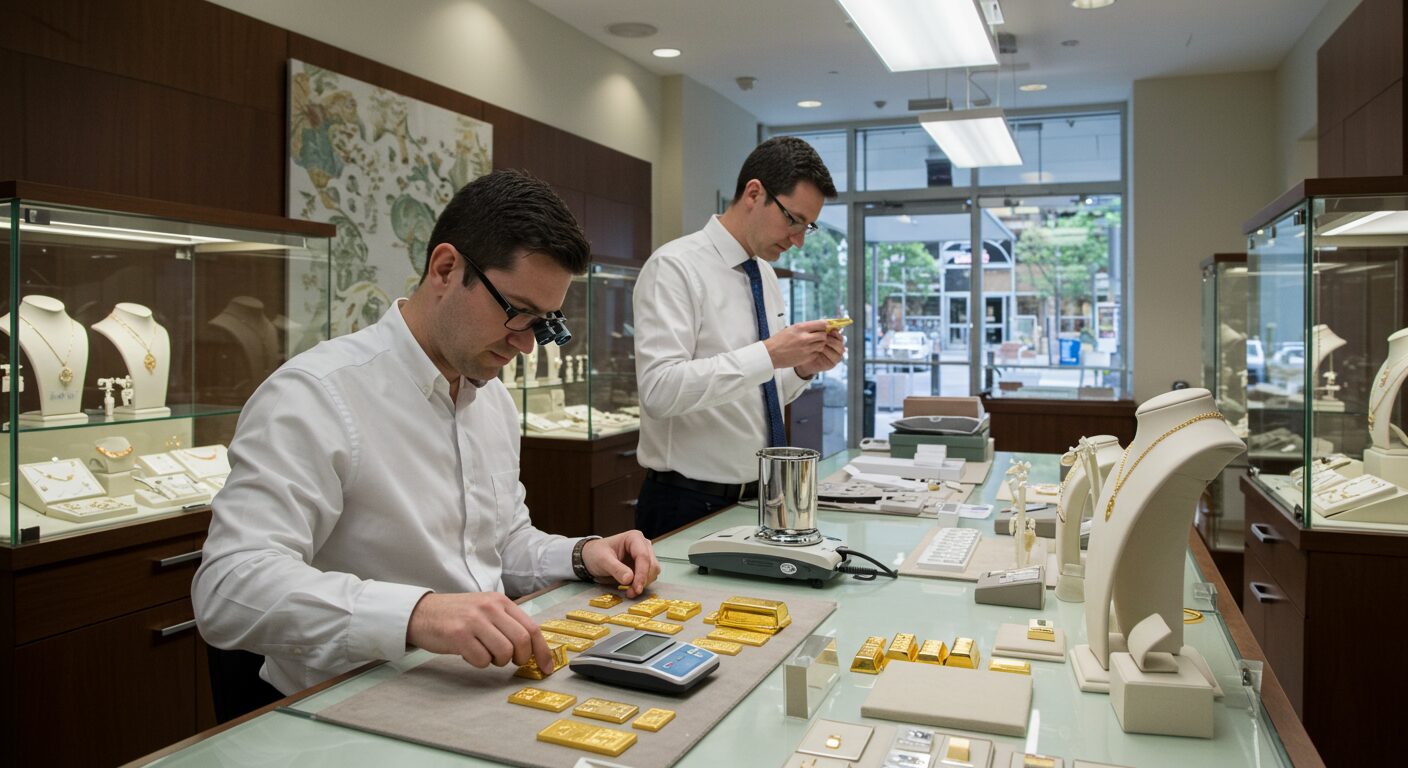
Unlocking the Secrets of Your Neighborhood Bullion Dealer
When you walk into a bullion dealer in NYC, you’re stepping into a world that most people completely misunderstand. The truth is, buying and selling precious metals isn’t some mysterious process reserved for Wall Street types or doomsday preppers. It’s a straightforward transaction that can protect your wealth, diversify your portfolio, or simply turn those old gold coins sitting in your drawer into cash. But here’s what nobody tells you: not all dealers operate the same way, and knowing the difference can mean hundreds or even thousands of dollars in your pocket.
After two decades in the diamond district, I’ve watched countless customers walk through our doors with the same questions and the same misconceptions. Let me clear the air about what really happens when you work with a reputable precious metals dealer.
The Real Difference Between Pawn Shops and Professional Dealers
Here’s something that surprises most people: pawn shops and professional precious metals dealers operate under completely different business models. A pawn shop makes money by lending against your items or buying them cheaply to resell at a markup. They’re generalists who deal with everything from guitars to jewelry to power tools.
A specialized dealer focuses exclusively on precious metals. We’re talking about businesses that track spot prices minute by minute, understand the nuances between different gold purities, and can accurately assess the premium on rare coins versus common bullion. The difference in what you’ll get paid is substantial.
Take a one-ounce American Gold Eagle, for example. A pawn shop might offer you 70% of spot price because they don’t have the market connections or expertise to properly value it. A professional dealer, especially one like 47 Street Bullion with established relationships in the diamond district, can typically offer 95% or more of spot price because they know exactly where that coin is going next.
The location matters too. Operating in the heart of Manhattan’s jewelry district means access to a network of buyers, refiners, and collectors that simply doesn’t exist in other neighborhoods. This competitive environment works in your favor as a seller.
What Your Dealer Isn’t Telling You About Premiums
Let’s talk about something that confuses almost everyone: premiums. When you buy precious metals, you pay more than the spot price. When you sell, you might get less. The question is, how much more or less, and why?
The premium on bullion products depends on several factors that most dealers won’t explain upfront. Manufacturing costs, supply and demand, the reputation of the mint, and the condition of the piece all play a role. A Canadian Maple Leaf typically carries a lower premium than an American Eagle, even though they contain the same amount of gold. Why? Brand recognition and domestic demand.
Here’s where it gets interesting: those premiums fluctuate constantly. During periods of high demand, like we saw during the 2020 pandemic, premiums on common bullion products doubled or even tripled. Smart buyers who understood this bought when premiums were low and sold when they spiked. Most people do the opposite because they’re reacting to fear rather than strategy.
When you’re selling, the dealer’s buy-back premium matters just as much. Some dealers advertise great prices on purchases but offer terrible buy-back rates. Others, like established operations in NYC’s jewelry district, maintain consistent spreads because they have steady demand from both retail customers and wholesale buyers.
The Timing Game Nobody Wants to Discuss
Ask any dealer when the best time to buy or sell precious metals is, and you’ll probably get a vague answer about “market conditions” or “personal financial goals.” That’s not entirely wrong, but it’s not the whole story either.
The precious metals market has patterns. Gold typically sees increased demand during periods of economic uncertainty, geopolitical tension, or currency instability. Silver often follows gold but with more volatility because it has both investment and industrial demand. Understanding these patterns gives you an edge.
But here’s what really matters for most people: the best time to establish a relationship with a dealer is before you need one. Walking in during a crisis when you desperately need cash puts you at a disadvantage. The dealer knows you’re under pressure, and even honest ones can’t offer their best prices when you’re in a hurry and haven’t done your homework.
Regular customers who’ve built relationships over time get better treatment. They know the staff, understand the pricing structure, and can have honest conversations about market conditions. This isn’t favoritism—it’s just good business on both sides. When you’re looking at pricing options, having that established relationship means you’re more likely to get a fair shake.
What Happens to Your Metals After You Sell
Most people hand over their gold or silver and never think about what happens next. Understanding this process actually helps you get better prices because you’ll know what the dealer is looking for.
Common bullion products—your standard one-ounce coins and bars from recognized mints—typically get resold quickly to other retail customers or wholesale buyers. The dealer makes money on the spread between buy and sell prices. The faster they can turn inventory, the tighter that spread can be.
Unusual or damaged pieces often go to refiners. This is where weight and purity matter more than appearance. If you have a bent gold coin or a scratched bar, it’s probably heading to a refinery where it’ll be melted down and reformed. The dealer pays based on the refined value minus processing costs.
Rare or collectible pieces might go to specialized dealers or auction houses. This is where knowledge really pays off. A dealer who recognizes a rare date or mint mark can offer you significantly more than one who just sees generic bullion. The diamond district advantage comes into play here—dealers in this area see more volume and variety, so they’re better at spotting valuable pieces.
When you work with a reputable operation that’s been around for years, you’re benefiting from their established channels. They’re not scrambling to find buyers or paying high refining fees. Those savings get passed back to you in the form of better buy and sell prices. It’s one reason why common myths about dealers often don’t hold up when you’re working with experienced professionals.
The Documentation You Actually Need
Let’s clear up another point of confusion: what you need to bring when buying or selling precious metals. The requirements vary depending on the transaction size and type, but they’re not as complicated as some people fear.
For purchases, most dealers don’t require identification unless you’re paying with cash over a certain threshold. Credit card or bank transfer purchases are straightforward. When selling, you’ll typically need a valid government-issued ID for any transaction. This isn’t the dealer being nosy—it’s a legal requirement designed to prevent theft and money laundering.
Keep your own records too. If you’re buying precious metals as an investment, document your purchase price, date, and the specific items you bought. This matters for tax purposes if you later sell at a profit. Many people don’t realize that precious metals are considered collectibles by the IRS, which means different tax treatment than stocks or bonds.
The best dealers provide clear documentation for every transaction. You should walk out with a receipt that specifies exactly what you bought or sold, the weight, purity, and price. If a dealer is vague about paperwork, that’s a red flag.
Building a Strategy That Actually Works
Here’s what twenty years in this business has taught me: the people who do best with precious metals are the ones who treat it as part of a broader financial strategy, not a get-rich-quick scheme or a panic move.
Dollar-cost averaging works with precious metals just like it does with stocks. Buying a little bit regularly, regardless of price fluctuations, smooths out the volatility and removes the emotional element from timing decisions. Some of our most successful customers are the ones who stop by monthly to add to their holdings, not the ones who try to time the market perfectly.
Diversification within precious metals matters too. Gold is the stable anchor, silver offers more growth potential with higher volatility, and platinum or palladium can provide exposure to industrial demand. The right mix
Frequently Asked Questions About Bullion Dealer
What’s the difference between buying bullion from a dealer versus a jewelry store in NYC?
Bullion dealers specialize in investment-grade precious metals and typically offer better pricing closer to spot market rates, while jewelry stores focus on crafted pieces with higher markups for design and labor. At a bullion dealer, you’ll find standardized bars and coins from recognized mints with transparent pricing based on current market values. This makes bullion dealers the better choice if you’re looking to invest in precious metals rather than purchase decorative jewelry.
Do I need to pay sales tax when buying gold or silver bullion in New York?
In New York State, purchases of investment-grade gold, silver, platinum, and palladium bullion are exempt from sales tax when the total transaction exceeds $1,000. This exemption applies to bars, rounds, and coins that meet specific purity standards (such as .995 fine silver or .995 fine gold). Your reputable NYC bullion dealer should automatically apply this exemption to qualifying purchases, which can result in significant savings compared to taxable jewelry purchases.
How do bullion dealers in NYC determine their buy and sell prices?
NYC bullion dealers base their prices on the current spot price of precious metals, which fluctuates throughout the trading day based on global market conditions. They then add a premium over spot for selling (to cover operational costs and profit) and offer slightly below spot when buying back from customers. Premiums vary based on the product type, quantity purchased, and market demand, with larger purchases typically receiving better per-ounce rates.
Is it safe to carry purchased bullion through NYC, or should I arrange secure transport?
Many NYC bullion dealers offer secure storage solutions or can arrange insured shipping to avoid the need to transport valuable metals yourself through the city. If you do choose to take immediate possession, consider visiting during business hours, using discreet packaging, and traveling directly to your destination or bank safe deposit box. For larger purchases, professional armored transport services are available and often worth the additional cost for peace of mind.
Can I sell my bullion back to the same dealer I purchased from in NYC?
Yes, most reputable NYC bullion dealers maintain a two-way market and will buy back the products they sell, though the buyback price will be lower than the selling price due to the dealer’s spread. It’s advisable to keep your original purchase receipts and ensure your bullion remains in good condition, as dealers pay premium prices for well-maintained products from recognized mints. Some dealers offer better buyback rates to repeat customers, so establishing a relationship with a trusted local dealer can be beneficial for long-term investors.
Leave a Reply